The frontier premium just died — here's what your company does about it
European firm gave its newest AI model away in London. Open models have all but caught the frontier — so you can finally own your intelligence, not rent it.
The 60-second version
Most companies “rent” AI: they send their data to a black box in someone else’s data centre and pay by the use. You can’t see inside it, and you can’t take it home.
“Open-weight” models flip that. You get the actual engine — to run on your own kit, under your own rules. In London, JetBrains gave its newest one, Mellum2, away under a no-strings licence.
A year ago, open models were miles behind the expensive “closed” ones. Today, per Artificial Analysis, they’re within a few points — and on some coding tests, level.
That means owning your AI is no longer the compromise option. For anyone who cares where their data lives — hospitals, banks, government, you — it might be the better option.
The catch, and the reason this is Part 2 of a series about trust: owning the model is not the same as being able to trust the stack underneath it.
Ivan Bobrov did something on the London stage that, in 2026, ought to be impossible.
He gave away the engine.
Bobrov is a lead machine-learning engineer at JetBrains — the European company, founded in Prague, whose coding tools sit on the laptops of millions of professional developers. On 21 May he walked a room full of engineers through how his team built their newest AI model, Mellum2, “from pre-training to post-training,” as he put it — “all the secrets.” Then he told them where to download it. Free. Under an Apache 2.0 licence, which is lawyer-speak for: take it, run it, build a business on it, you don’t owe us anything.
To understand why a profitable company would do that — and why it matters to you, even if you will never write a line of code — you need the difference between renting intelligence and owning it.
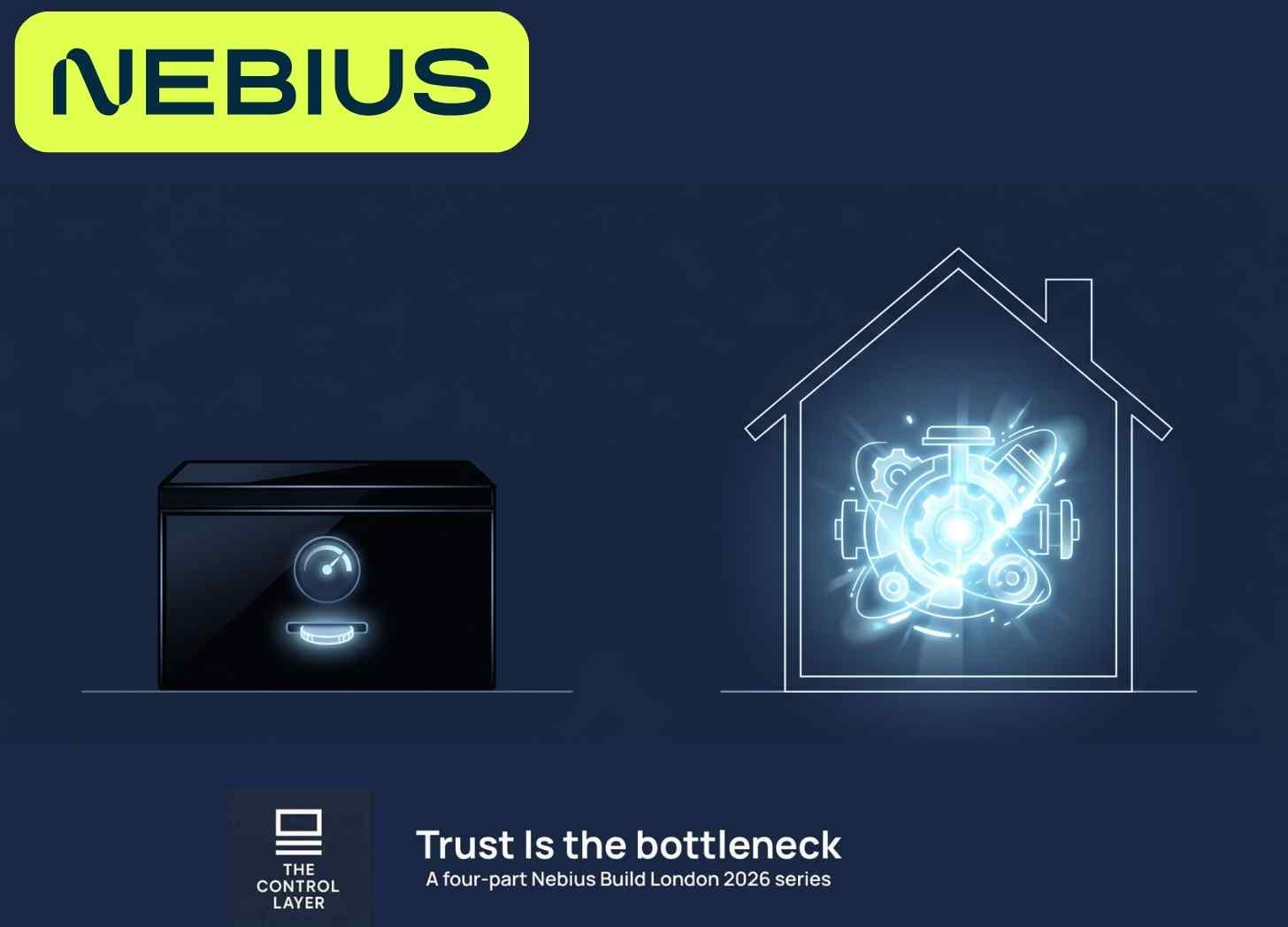
The meter and the engine
Most AI you’ve heard of is closed, or “proprietary.” Think of it as electricity from the grid. You flip a switch, you get power, you pay per unit. You have no idea what’s happening in the power station, you can’t visit it, and you certainly can’t take a generator home. The big American models work like this: your words go off to a data centre you’ll never see, the answer comes back, the meter ticks.
It’s convenient. For a lot of uses, it’s brilliant. But there’s a price beyond the bill. Every time you use it, you are trusting a black box with your data — and you have no way to verify what it does in there.
Open-weight models are the other thing. The “weights” are the model’s actual brain — the giant grid of numbers it learned during training. When a company publishes those weights, you get the engine itself. You can run it on your own computers, inside your own building, behind your own firewall. You can take it apart. Nobody meters it. Nobody else sees your data, because your data never leaves.
For years, this was the worthy but worse option. Open models were the hand-me-downs — fine for tinkering, not for serious work. That is the thing that just changed.
The gap closed while you weren’t looking
Here are the numbers, and they are genuinely startling.
The independent analysts at Artificial Analysis track a single “Intelligence Index” across all the major models. A year ago, the best open model scored 22 on it — around 13 points behind the best closed one. A gulf. As of early 2026, the leading open-weight models sit on roughly 54, within three to six points of the most expensive proprietary systems money can buy. The gulf became a rounding error.
On coding — the thing these models are increasingly paid to do — it’s even tighter. On the widely-used SWE-bench test, the open model MiniMax M2.5 scores 80.2%. Anthropic’s flagship Claude Opus 4.6 scores 80.8%. Six-tenths of one percent, between the free one and the frontier one.
And on Nebius’s own SWE-rebench — a tougher, deliberately “un-gameable” version we’ll come back to in Part 4 — the open Chinese model GLM-5 trailed the best closed model by under three points as of late May 2026.
You are no longer choosing between good and expensive or free and embarrassing. You are choosing between two things that are roughly as capable as each other — where one lives in someone else’s building and one can live in yours.
This is where the word “sovereignty” stops being abstract
The technology industry has a grand phrase for this: sovereign AI. Even Jensen Huang, the chief executive of Nvidia — a man who sells shovels to every side of this gold rush — argues that every country now needs its own AI capability: built on its own infrastructure, trained on its own data, governed by its own rules.
Strip away the grandeur and it’s a kitchen-table idea. Where does your information live? Whose laws govern it? If the relationship sours, or the price triples, or a government on another continent changes the rules, can you carry on — or are you stranded?
For a British hospital weighing up an AI that reads scans, for a bank automating compliance, for a government department handling citizens’ records, “we rent it from a black box in Virginia” is not a comfortable answer. “We run an open model on UK soil, under UK law, and nobody else ever sees the data” is a very different one. It is, not coincidentally, the bet my own company makes, and the reason this publication exists.
Nvidia, for its part, isn’t just talking. It now publishes its own family of open models, Nemotron — weights, training data and recipes in the open — alongside the open NeMo framework for building your own. Europe is moving too, from France’s Scaleway to Italy’s Fastweb building sovereign AI supercomputers. And platforms like Hugging Face now let you reach 200-plus open models, pay-as-you-go, with no markup — a halfway house for those not ready to run their own hardware.
Owning your intelligence used to mean accepting a worse product. It doesn’t any more. That’s the door that opened in London.
The catch — and the reason this is a series about trust
Now the honest part, because zero fluff is the deal here.
Owning the model is not the same as owning the stack underneath it. You can download Mellum2 for free and still be running it on chips from one company, in a data centre from another, on a power grid you don’t control. I’ve written before, in Four Chokepoints and The Metal Floor, about how much of our supposed “sovereignty” still rests on imported metal and a handful of irreplaceable suppliers. Possessing the weights is necessary. It is not sufficient. Anyone selling you “total sovereignty” in a single click is selling you something.
And here’s the deeper trap, the one that ties this whole series together. An open model you can inspect is not the same as an open model you can trust. You hold the weights — billions of numbers — but you still can’t fully explain why it does what it does, or guarantee it won’t fail in some way you didn’t test for. Transparency of access is not transparency of behaviour.
So the open-weight revolution hands us back control of where our intelligence runs and who sees our data. Real, valuable, and worth grabbing with both hands.
What it does not hand back — what nobody has handed back yet — is the ability to be sure the thing is doing what we think it’s doing.
Which is exactly the problem waiting for us in Part 4. First, though, that problem is about to climb into a car and drive itself through central London.
This is Part 2 of Nebius Build London 2026, a four-part series from The Control Layer. The companion conversation airs on The Control Layer with Amer Altaf — subscribe to get each part, and the episode, the moment it lands.
Where artificial intelligence, cybersecurity and enterprise leadership intersect. Zero fluff.
→ Next: Part 3 — The robots booked an Uber. ← Missed it? Part 1 — The inference flip.
Sources & further reading
Artificial Analysis — open-weight model launches & Intelligence Index: https://artificialanalysis.ai/articles/recent-open-weights-model-launches
JetBrains — Mellum2 on Hugging Face (Apache 2.0): https://huggingface.co/JetBrains and https://blog.jetbrains.com/ai/
NVIDIA Nemotron (open models): https://developer.nvidia.com/nemotron · NeMo framework: https://github.com/NVIDIA-NeMo/NeMo
Nvidia / Jensen Huang on sovereign AI: https://blogs.nvidia.com/blog/what-is-sovereign-ai/
Hugging Face Inference Providers: https://huggingface.co/docs/inference-providers/index
SWE-rebench leaderboard: https://swe-rebench.com
Related reading on The Control Layer: DeepSeek V4 and the death of two monopolies; The Metal Floor; Four Chokepoints


