Jaguar Land Rover Paralysed by Cyber Attack: What It Means for UK Industry
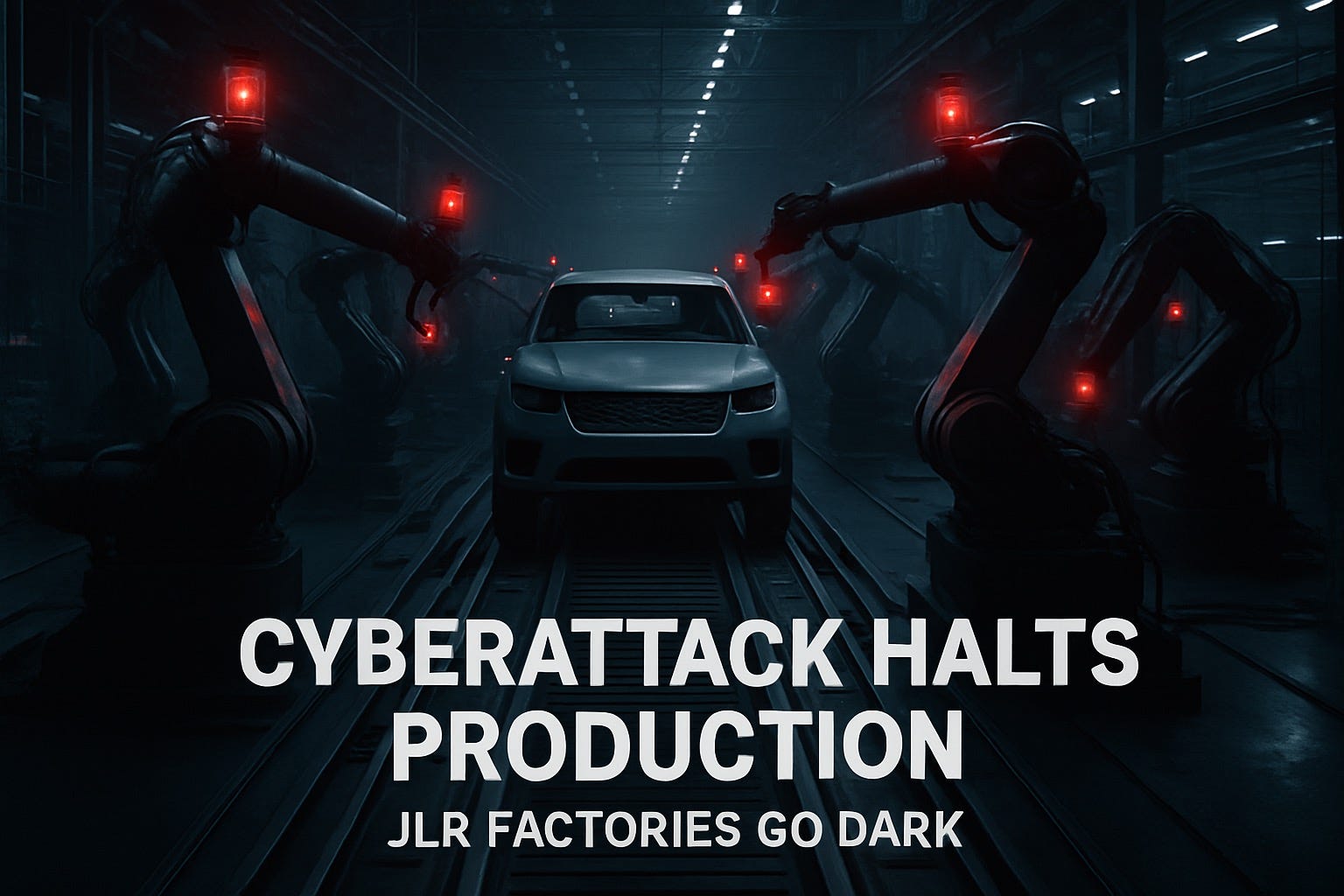
Jaguar Land Rover (JLR) has been struck by a major cyber attack, forcing shutdowns at multiple UK plants and crippling retail operations across its global footprint. The disruption began over the weekend and has rippled into the start of September—traditionally one of the busiest sales periods for the automotive sector.
Immediate Fallout
Factories offline: JLR shut down production at Halewood (Merseyside) and Solihull, home of the Range Rover and Range Rover Sport. Workers were told not to report for shifts, with some sent home mid-day as IT systems went dark.
Sales blocked: The incident coincided with “new plate day” on 1 September, when UK car dealers record some of their highest volumes. JLR dealers were unable to register vehicles, stalling deliveries.
Customer reassurance: The company says there is currently no evidence that customer data has been compromised, though forensic investigations are ongoing.
The Cost of Downtime
The automotive sector runs on just-in-time production. Every hour of downtime is estimated to cost manufacturers upwards of £1.6 million. For JLR, the scale of halted production across two flagship plants could translate into tens of millions lost in just a few days.
This comes on top of tough trading conditions:
Profits fell 49.4% in recent months, to £351 million.
Electric vehicle launches have already been delayed to allow more testing.
The cyberattack piles operational chaos onto financial pressure.
JLR’s Response
JLR detected the intrusion in progress and chose to proactively shut down IT systems to contain the threat. “We are working at pace to restart our global applications in a controlled manner,” the company said
So far, the attacker’s identity is unknown. Security analysts point to the rise of ransomware-as-a-service gangs, where sophisticated tools are leased to affiliates who strike large corporations.
Why It Matters
This is not an isolated case. Marks & Spencer, Co-op and Harrods have all suffered cyber incidents this year. JLR’s plight is a warning shot for UK critical industries:
Automotive is high-value: Complex supply chains, high output value per hour, and global dependencies make it a prime target.
Manufacturing IT/OT convergence: The blending of traditional factory systems with connected IT broadens the attack surface.
Reputation risk: Public trust in JLR’s recovery is as important as immediate operations, especially as it tries to compete in the electric vehicle race.
Risks and Constraints
Prolonged recovery: Restoring global IT systems “in a controlled manner” may take weeks. Supply chain partners could be hit by cascading delays.
Insurance and regulation: Under UK GDPR and the NIS Regulations, JLR must demonstrate adequate cyber risk management and could face regulatory scrutiny if gaps emerge.
Global exposure: JLR’s Indian parent company, Tata Motors, and its worldwide dealer network will be watching how containment and disclosure are handled.
Action Plan for UK Boards
Treat manufacturing as critical infrastructure. Cyber resilience planning cannot stop at IT; it must extend into operational technology (OT) environments.
Test crisis response plans. Run red-team exercises simulating attacks at peak trading periods, such as “new plate day”.
Accelerate zero-trust adoption. Segmentation and identity-driven controls reduce the blast radius of intrusions.
Supply chain due diligence. Evaluate security posture across upstream and downstream partners, not just internal IT.
“Every hour of downtime can cost millions. In a hyperconnected supply chain, cyber resilience is now as important as production efficiency.”


