



On the edge of Bristol, inside a data hall humming with liquid-cooled technological muscle, stands one of the most ambitious feats in the UK’s recent scientific history. Isambard-AI, now officially the most powerful supercomputer in the country and among the very top globally, isn’t just an assembly of processors and wires—it’s the linchpin for Britain’s hopes to reclaim the driver’s seat in the global race for artificial intelligence.
Announced in late 2023 and commissioned in July 2024, Isambard-AI is more than a futuristic monolith. It represents a paradigm shift for researchers, clinicians, industry leaders, and policymakers keen to realise the UK’s ambitions to lead in advanced computation, scientific discovery, and responsible AI. The significance is enormous: Isambard-AI is 10 times more powerful than the UK’s previous top system and is already being put to work on everything from personalised cancer diagnosis to modeling the future of our planet’s climate to analysing millions of potential drugs.
But what makes Isambard-AI so special—how does it compare to other world-class supercomputers, what are the practical applications, and how might you or your institution gain access to its remarkable power? Let’s explore the high-stakes world of AI supercomputing and discover the profound opportunities now opening for the UK research ecosystem.
The Powerhouse Unveiled: What Is Isambard-AI?
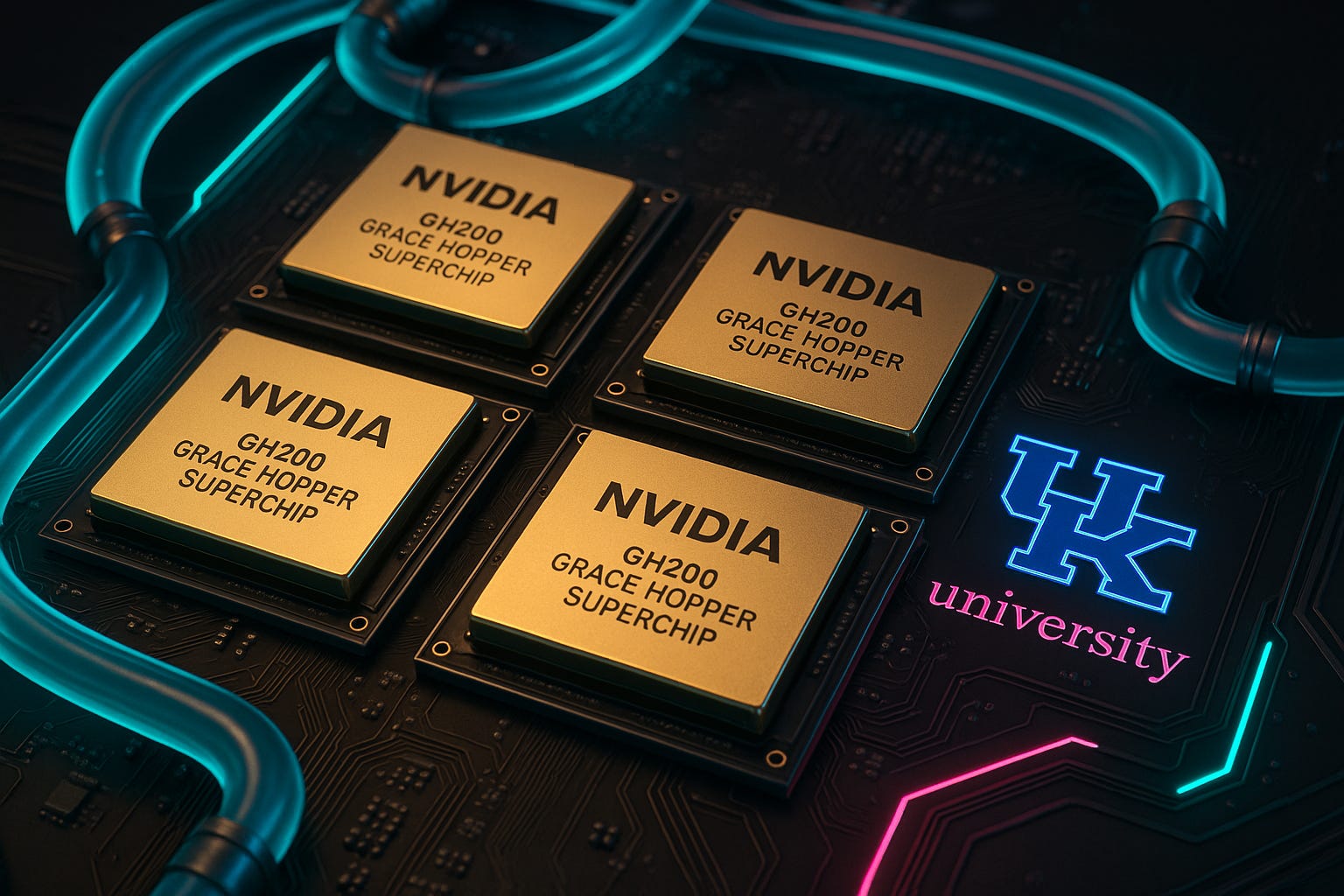
At the heart of Isambard-AI’s prowess are 5,448 NVIDIA GH200 “Grace-Hopper” Superchips, orchestrated within several HPE Cray EX supercomputer cabinets and cooled by an advanced liquid-cooling network. The numbers alone are staggering:
21 ExaFLOPs of AI compute (that’s 21 quintillion floating-point operations per second, using 8-bit “AI-optimised” arithmetic).
217 PetaFLOPs of double-precision (64-bit) performance for conventional scientific computing.
25 Petabytes of cutting-edge storage, connected by HPE Slingshot 11 interconnect fabric (200 Gigabits per second—2,000 times UK home broadband speeds).
To visualise its processing might: the system can analyse, in a single second, what would take the entire population of planet Earth 80 years if we all used basic calculators non-stop.
Yet Isambard-AI is not just about raw power. Its energy efficiency will be among the best in the world, with an average Power Usage Effectiveness (PUE) target of under 1.1—meaning for every watt spent on computing, barely a tenth of a watt is wasted on cooling and infrastructure. This is a vital consideration as AI scales and energy costs mount.
How Does Isambard-AI Compare Globally?
For decades, supercomputing leadership has been dominated by the United States, with significant contributions from Japan and Europe. The latest TOP500 rankings (which measure traditional double-precision floating-point performance using the HPL benchmark) show a clear picture of global supercomputing power.
The Global Supercomputing “Leaderboard”
As of June-2025, the world’s fastest machines according to the TOP500 and the HPL-MxP AI benchmark are:
El Capitan (US): 1.74 exaFLOPs - Lawrence Livermore National Laboratory
Frontier (US): 1.35 exaFLOPs - Oak Ridge National Laboratory
Aurora (US): 1.01 exaFLOPs - Argonne National Laboratory
JUPITER Booster (Germany): 793 petaFLOPs - Forschungszentrum Jülich
Eagle (US): 561 petaFLOPs - Microsoft Azure
HPC6 (Italy): 478 petaFLOPs - Eni S.p.A.
Fugaku (Japan): 442 petaFLOPs - RIKEN Center for Computational Science
Alps (Switzerland): 435 petaFLOPs - Swiss National Supercomputing Centre
LUMI (Finland): 380 petaFLOPs - EuroHPC/CSC
Leonardo (Italy): 241 petaFLOPs - EuroHPC/CINECA
Isambard-AI (UK): 217 petaFLOPs - University of Bristol
Leading Chinese systems: (some unpublished specs, thought to be in exascale class).
Isambard-AI ranks 11th globally in traditional double-precision performance, making it the most powerful supercomputer in the UK and returning Britain to the global top 15 for the first time since 2002.
However, these traditional benchmarks don’t tell the full story. Isambard-AI’s true strength lies in its AI-optimized performance. While the TOP500 measures conventional scientific computing, Isambard-AI’s 5,448 NVIDIA GH200 chips are specifically designed for artificial intelligence workloads using mixed-precision arithmetic. In AI performance metrics, the system delivers an impressive 21 exaFLOPs of AI compute - putting it among the world’s most powerful AI-focused systems.
What sets Isambard-AI apart is its accessibility: unlike many top-ranked systems that serve primarily military or commercial purposes, Isambard-AI is a public research resource available to UK universities, the NHS, and approved industry partners for breakthrough science and innovation.

Under The Hood: The Tech That Powers Isambard-AI
The NVIDIA GH200 Superchip is the secret sauce, uniting a 72-core Grace ARM CPU with Hopper architecture GPU accelerators and eye-watering local memory bandwidth. Each “blade” (a modular server component) bundles eight superchips. This hardware is woven together through the HPE Slingshot 11 network, which wrings every drop of bandwidth from the system.
Efficiency is further enhanced by direct liquid cooling – heat from the chips is circulated in water pipes, improving performance, reducing the carbon footprint, and allowing creative campus side-benefits (waste heat is planned to be pumped to nearby university buildings for hot water and heating).
High-performance, AI-optimised hardware is only half the story—the Isambard-AI team has invested heavily in software stacks, secure research enclaves, and workload scheduling to allow researchers to use complex AI frameworks (like PyTorch and TensorFlow) and scientific modeling code with maximum ease.
Why Does the UK Need a Supercomputer Like Isambard-AI?
For the past two decades, Britain has slipped behind global leaders in large-scale computing. The consequences touched all corners of science—weather simulation for flood defence, genomics research for cancer therapies, material science for next-generation batteries, and, most urgently, the training of the latest large language models (LLMs) in AI.
AI “Sovereignty” and Strategic Control
As generative AI explodes in scope, the bulk of compute resources lies in the hands of a few Big Tech firms (Google, Microsoft, Amazon, OpenAI, Anthropic), sometimes raising concerns for data privacy, export controls, and research independence. The UK government’s AI Research Resource (AIRR) initiative emphasises the need for domestic AI muscle to “make” rather than simply use AI developed elsewhere.
Accelerating Science Across Disciplines
From basic genomics to engineering, biomedical AI, and climate science, modern breakthroughs are impossible without massive simulation and pattern-finding across terrifyingly large datasets. The UK’s top scientists have been bottlenecked by lack of affordable and accessible supercomputing—Isambard-AI directly addresses that.
Driving Industry Innovation
Pharmaceutical giants, energy firms, and financial services all have pressing high-performance computing (HPC) and AI requirements. Isambard-AI offers a “sandbox” where startups and blue-chips can test next-generation models and algorithms, de-risking technology before massive commercial deployment.
Supporting Public Services
The NHS is becoming a data-driven institution. From optimising hospital workflows to training AI to spot cancer, national compute infrastructure ensures these benefits are widely distributed—and the value (and privacy) resides within the country.

Key Use Cases and Transformative Applications
1. Cancer Diagnosis and Medical Imaging
Perhaps the most headline-grabbing application is in cancer diagnosis. University College London (UCL) announced it is already leveraging Isambard-AI to develop AI tools for earlier detection of prostate cancer, using NHS MRI scans. Such systems have the potential to be deployed across all UK hospitals, improving diagnosis, equity of care, and outcomes.
The same infrastructure can be used to:
Tackle melanoma detection across diverse populations, reducing “hidden bias” that occurs when models are trained only on lighter skin tones.
Analyse whole-genome data to learn which mutations correlate with specific cancer subtypes, enabling ultra-precise, personalised medicine.
Simulate complex biological molecules, dramatically speeding up drug discovery, targeting the likes of Alzheimer’s, rare diseases, and infectious threats like COVID-19.

2. Protein Structure and Drug Design
With its extraordinary compute, Isambard-AI can “fold” proteins in silico (virtually) using AI models—testing how new drugs, antibodies, or gene edits interact with human biology, years faster and at much lower cost than traditional wet labs.
This capability was famously demonstrated by DeepMind (a London AI firm, part of Google) with their AlphaFold system (which relied on Google compute). Now, UK scientists, small bio-techs, and NHS partners have a public resource within their own borders.
3. Climate Science and Environmental Modeling
From local flood risk prediction in the Thames Valley to long-term modelling of global climate change, Isambard-AI is being used to:
Run high-resolution simulations of the Earth’s atmosphere, oceans, and land use.
Forecast extreme weather patterns, providing actionable data for UK environmental agencies.
Model transitions in energy systems, such as hydrogen production, battery performance, and national grid optimisation.

4. AI Foundations, Safety, and Regulation
Now the UK can train and fine-tune cutting-edge large language models (LLMs)—the brains behind generative AI tools like GPT-4—within its own public research ecosystem. This is critical for:
Ensuring AI models are transparently trained and audited for bias.
Simulating potential risks (misinformation, bias, “hallucinations”) before real-world deployment.
Training specialized LLMs for use in government, public health, and education—without sending sensitive data overseas.
5. Physics and Engineering
Aerospace, automotive, and energy engineering firms are eagerly anticipating access to Isambard-AI for simulations of turbulent airflow, stress tests on new materials, and schemes for decarbonising heavy industry. Physics teams can model the fundamental particles that could drive the next quantum revolution.
Who Can Use Isambard-AI—and How?
UK Research Community
Isambard-AI is a public resource. Its compute cycles are accessible to UK-based researchers, subject to application and review. The primary route is via the UKRI (UK Research and Innovation) supercomputing allocation scheme. Proposals are invited from:
Academic staff at UK universities and research institutes,
NHS Trust research teams,
Government research agencies,
Public-private consortia (with research merit and public good criteria)
Researchers must submit proposals outlining the scientific or AI challenge, the compute resources needed, and potential impact. Allocations are peer-reviewed and prioritised for high-impact, open science.
Industry—Large, SME, Startups
Industry access is possible via several routes:
Collaborative research projects: Partner with a UK university to access compute for joint industrial research.
Direct allocation (pilot): Businesses can apply for cycles for pre-competitive research, particularly if aligned with government priority areas (healthcare, net-zero, critical infrastructure).
AI accelerators and programs: Innovate UK and other agencies are piloting business-facing access schemes, featuring mentoring and goal-driven sprints.
The NHS and Healthcare Providers
With mounting evidence for AI’s benefit in disease detection and clinical workflow optimization, NHS-affiliated research teams and digital transformation units can apply for direct access, often in partnership with university collaborators.
AI, Safety, and Governance Groups
Given growing concerns about AI safety and the need for transparent, robust model evaluation, watchdogs, ethical AI panels, and regulatory technologists can access infrastructure to stress-test models, evaluate for safety, and refine standards—part of the UK’s whole-of-society approach to AI governance.
Application Process & Support
Proposals (usually 2–4 pages) are reviewed quarterly by an expert committee (UKRI Advanced Computing Review Panel).
Priority is given to research that aligns with the National AI Strategy, demonstrates societal impact, or involves collaboration between academia and industry.
Successful applicants get onboarding and advanced technical support from the Isambard-AI team, plus access to training on HPC and AI tools.

What Will This Mean For The Future Of AI In The UK?
1. Levelling The Playing Field
No longer will Britain’s best minds be locked out of mega-scale AI research for lack of hardware. Isambard-AI enables radical democratisation: the world’s top compute, supporting the whole research community, from early-career scientists to established institutions.
2. Retention and Attraction of Talent
Young researchers and AI engineers can now stay in the UK, knowing their ambitions can be realised here—with world-class infrastructure, support, and collaborative networks.
3. Commercial and Social Innovation
With access to affordable, public infrastructure, startups can trial new ideas—especially in the “compute-starved” space of advanced AI and scientific modeling—growing Britain’s innovation ecosystem.
4. AI Safety and Global Leadership
By hosting and evaluating AIs at scale, Britain gains leverage in international talks on AI safety, ethics, and regulation—bolstered by real technical capability, not just rhetoric.
5. Net-Zero and Energy Efficiency
Isambard-AI’s focus on green energy use, waste heat recycling, and advanced cooling systems sets a benchmark for sustainable compute—one that could well be adopted by the private sector.
The Challenges Ahead
No technological leap comes without challenges. AI workloads are rapidly growing—training the largest models now consumes millions of GPU hours. Keeping the system upgraded, funding equitably, and distributing access will remain complex. Safeguarding data privacy, especially in sensitive sectors like health, is paramount.
Competition from the global tech giants is also fierce—Google’s and Microsoft’s private clusters dwarf even Isambard-AI. But the UK’s approach—public, open, and focused on broad societal benefit—offers a distinctive and potentially more sustainable model.
Conclusion: A New Era for UK Science and AI
Isambard-AI is more than a technical marvel; it is a mission statement. By reclaiming a spot near the top of the global supercomputing league, the UK signals its determination to not just be an “AI taker” but an “AI maker.” The impacts will ripple across science, industry, public services, and society. If you are a UK-based researcher, innovator, doctor, or student, the era of queuing for what some call “AI compute rations” is finally over. The future is, quite literally, at our fingertips, as long as we continue to invest and maintain our great start.